Ananke
The Hunchback of Notre DameAnanke names the fatal and melancholy significance attached to ANArKH, a deeply cut inscription that the book’s author found in a shadowed nook of a tower at Notre-Dame Cathedral. The letters disappear from the stone, but the book preserves their memory: the erased word becomes both a mystery about an unknown sufferer and the declared foundation of the narrative.
The Inscription in the Tower
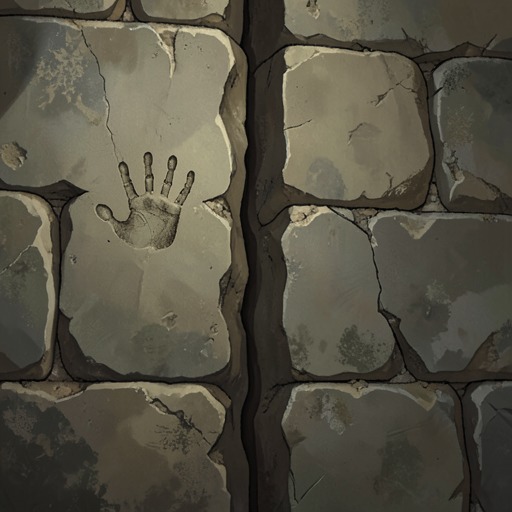
Several years before writing the preface, the author visited Notre-Dame Cathedral, or, as the preface puts it, rummaged about in it. In an obscure nook of one of its towers, he came upon a word engraved by hand in the wall: ANArKH. The discovery is presented not as a formal record of an artifact but as an encounter with a surviving trace, hidden in the architecture and encountered during an exploratory visit.
The letters are described as Greek capitals, blackened by age and deeply cut into the stone. Their forms and postures bear signs of Gothic calligraphy. To the author, those features suggest that the inscription was made by a hand from the Middle Ages. Its setting and physical appearance therefore connect it to a vanished past: the wall holds not merely a word but evidence that someone once marked the church with it.
The inscription’s force depends on the disparity between its brevity and the burden of meaning the author perceives in it. He calls that meaning fatal and melancholy, but the preface does not identify the person who carved the letters or explain the circumstances behind them. ANArKH remains legible as a trace while its maker’s story remains inaccessible.
The Unknown Hand and Its Meaning
The author responds to the inscription by asking who could have written it. He imagines a soul in torment unwilling to leave the world without placing a stigma of crime or unhappiness upon the ancient church. This is a question and an interpretation, not a recovered biography: the writer does not name the inscriber or establish what crime or sorrow, if any, the word records. The unresolved gap between the surviving mark and the missing life is central to the preface’s account of Ananke.
The word consequently joins an intimate human mystery to the history of the building. Its carved letters seem to preserve an individual’s anguish, yet the person who made them has disappeared from the generations of humanity. The inscription gives the author a material point from which to imagine that absent person, but it cannot restore the person’s identity. The mark is evidence of an act of writing; the suffering that gives it its apparent significance remains an inference prompted by the word’s fatal, melancholy meaning.
Erasure and the Fragility of Memory
When the author returned to the question of the inscription, it had disappeared. He does not know whether the wall was whitewashed or scraped down. That uncertainty matters: the loss is certain, but its immediate cause is not. The preface sets this small disappearance within a wider account of damage to medieval churches over the preceding two hundred years. A priest whitewashes; an archdeacon scrapes; then the populace demolishes. Destruction comes from within as well as from without, through different actions and agents.
The sequence turns the wall’s alteration into more than the removal of a single word. Once the inscription is gone, only the author’s fragile recollection, entrusted to the book, remains of it. The person who carved it vanished centuries earlier; the word has now been effaced from the church; and the church itself, the preface warns, may one day disappear from the earth. These successive losses place a human life, its written trace, and the building that received that trace within a shared vulnerability to time and destruction.
The inscription thus survives in a changed form. It no longer survives as writing in the tower but as a remembered word in the preface. The book does not restore the original carving or resolve the mystery of its author; it records that the mark existed and that it was erased. Preservation here is explicitly precarious: memory can carry the lost word forward, but the preface calls that memory fragile and identifies it as the sole remaining witness to the inscription.
The Word as the Book’s Foundation
The preface makes the connection between the vanished inscription and the work’s structure explicit: “It is upon this word that this book is founded.” Ananke is therefore not simply a word encountered in the setting. It is the stated point of departure for the book, linking its narrative to the mystery of the medieval hand and to the fate of Notre-Dame Cathedral itself.
That foundation is also an act of preservation. The author begins from an inscription that cannot be seen anymore and commits its memory to a book, so the narrative carries forward what the altered wall no longer displays. The relationship is not one of complete recovery: the source mark is gone, its maker remains unknown, and its circumstances are not supplied. Instead, the book’s stated origin preserves the conjunction of a word, a vanished person, and an endangered monument, while keeping the limits of what can be known visible.
The preface is dated March 1831. Its date places the account of the discovery and erasure within the book’s own record of transmission: a medieval inscription survives briefly in the author’s encounter, disappears from the stone, and is then entrusted to written memory. Ananke thus functions as both the book’s declared foundation and a compact statement of its opening concern with loss: what has vanished may still shape a work, even when only a fragile recollection remains.